
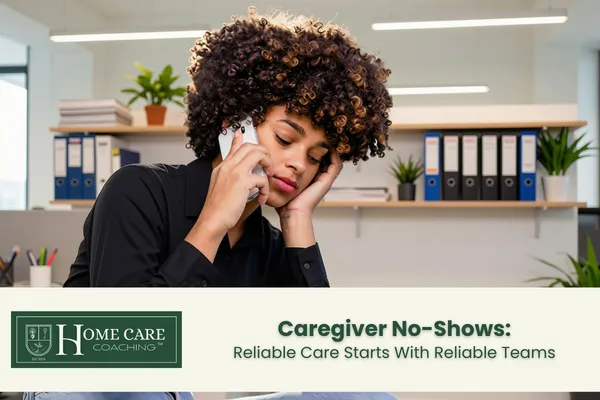
Caregiver No-Shows: Why They Happen and What Home Care Owners Should Understand
Running a home care agency is meaningful work. It is also very personal work.
Families trust your agency to send reliable caregivers into their homes. They expect care, safety, and consistency. Additionally, they want peace of mind.
That is why caregiver no-shows can feel so stressful.
A missed shift is not just a scheduling issue. It can affect a family’s trust. It can overwhelm office staff. It can also place pressure on the owner.
For new home care owners, this can feel scary. For established owners, it can feel exhausting.
However, caregiver no-shows in home care are not always random. Many times, they are connected to deeper staffing, communication, and leadership issues.
Understanding why they happen is the first step toward building a stronger agency.
Why Caregiver No-Shows Matter
Caregiver no-shows can create a serious ripple effect.
First, the client may be left without needed support. This can create fear for families. It can also make them question the agency’s reliability.
Additionally, office staff must react quickly. They may need to call other caregivers, adjust schedules, and calm worried families.
Moreover, repeated no-shows can damage your agency’s reputation.
Home care is built on trust. When a caregiver does not arrive, trust can be shaken.
Therefore, owners must take caregiver no-shows seriously.
This does not mean every absence is caused by poor character. Sometimes emergencies happen. However, repeated patterns need attention.
The Staffing Market Is Still Challenging
The home care industry continues to face workforce pressure.
A 2026 home care survey reported that caregiver shortages remain the top industry pain point. The concern improved from 59% to 53%, but staffing still remains a major challenge for agencies. Additionally, AI was identified as a leading technology trend, especially for caregiver matching and automated scheduling.
Similarly, the Home Care Association of America reported that caregiver shortages, client affordability, and rising costs remain top pain points. The report also noted that many leaders expect AI to help with scheduling and client-caregiver shift matching.
This matters because caregiver no-shows in home care do not happen in isolation.
They often happen inside a difficult staffing environment. Caregivers may have multiple job options. They may face long travel distances. They may also struggle with inconsistent schedules.
Therefore, owners need to understand the market they are hiring in.
Why Caregiver No-Shows Happen
Caregiver no-shows can happen for many reasons.
Some reasons are personal. Others are connected to the agency’s structure.
Common causes may include:
• Poor communication
• Last-minute schedule confusion
• Low caregiver engagement
• Burnout or fatigue
• Long travel distances
• Weak connection to the agency
• Unclear attendance expectations
• Better work opportunities elsewhere
• Lack of trust in office support
• Personal emergencies
Additionally, some caregivers may not understand how serious a missed shift can be.
They may see it as one absence. However, the family may experience it as a broken promise.
This is why education, leadership, and communication matter.
No-Shows Can Point to a Bigger Problem
A single no-show may happen because of an emergency.
However, repeated caregiver no-shows may signal a deeper issue.
For example, the agency may not have clear expectations. The caregiver may not feel connected to the team. The schedule may not fit their availability. Additionally, the office may not be communicating clearly.
Furthermore, repeated no-shows can be a sign of weak retention.
If caregivers do not feel supported, they may disengage. Then they may stop responding, call out often, or leave without notice.
Regarding home care staffing challenges, no-shows are often one symptom of a larger staffing problem.
Communication Sets the Tone
Communication is one of the most important parts of caregiver reliability.
Caregivers need clear shift details. They also need to know who to contact with questions. Additionally, they need updates when anything changes.
When communication is unclear, mistakes happen.
A caregiver may misunderstand the time. They may be unsure about the location. They may also feel unsupported before the shift begins.
Moreover, communication should be respectful.
Caregivers are more likely to stay engaged when they feel treated like valued team members.
This does not mean owners should accept unreliable behavior. Accountability matters. However, communication and accountability should work together.
Scheduling Can Affect Reliability
Scheduling is one of the biggest pressure points in home care.
Caregivers may balance several responsibilities. Some have family obligations. Others may work with more than one employer. Additionally, transportation can affect their ability to arrive on time.
Long travel distances can also increase the risk of missed shifts.
Moreover, inconsistent schedules can make it harder for caregivers to stay committed.
This is why home care scheduling must be taken seriously.
Technology can help agencies stay organized. Current industry reports show strong interest in AI-assisted caregiver matching and automated scheduling.
However, technology alone is not the full answer.
Owners still need leadership, clear expectations, and a strong caregiver experience.
Burnout Can Lead to No-Shows
Caregiving is meaningful work. It can also be physically and emotionally demanding.
Caregivers may support clients with complex needs. They may work long hours. They may also deal with stress from families, transportation, or personal life.
Over time, burnout can grow.
When caregivers feel overwhelmed, reliability may suffer. They may call out more often. They may stop responding. They may also leave the agency.
Additionally, burnout can affect the quality of care.
Therefore, owners should pay attention to warning signs. Caregiver support is not just kind. It is also good business.
Culture Matters More Than Many Owners Realize
Caregivers notice how an agency treats them.
They notice if the office responds quickly. They notice if their concerns are heard. They also notice if they feel replaceable.
A weak culture can increase caregiver no-shows.
However, a strong culture can improve engagement.
Caregivers are more likely to show up when they feel connected to the mission. They are also more likely to communicate when problems arise.
Furthermore, culture starts with leadership.
Owners set the tone. Office staff then carry that tone into daily conversations.
What New Owners Should Understand Before Opening
If you are preparing to start a non-medical home care business, think about caregiver reliability early.
Do not wait until the first missed shift to consider attendance expectations.
Additionally, understand that caregiver no-shows are not only a staffing issue. They connect to recruitment, retention, communication, scheduling, and culture.
This does not mean you need to have every answer on day one.
However, it does mean staffing should be part of your startup planning.
A home care agency needs clients. It also needs caregivers who can serve those clients well.
What Established Owners Should Notice
If you already own an agency and feel stuck, no-shows may be draining your growth.
You may feel like you are always reacting. You may spend too much time filling shifts. You may also worry about losing clients because of staffing issues.
If this sounds familiar, pause and look for patterns.
Are no-shows happening with certain cases?
Are they happening after schedule changes?
Are caregivers disengaged?
Are expectations unclear?
Are office responses too slow?
These questions can help you think more clearly. However, the deeper work may require structure and support.
Moving Forward With Confidence
Caregiver no-shows are frustrating. They can also feel personal.
However, they are not hopeless.
Many agencies reduce staffing stress by improving communication, caregiver support, scheduling awareness, and leadership habits.
Additionally, the industry is moving toward better technology and stronger workforce systems. These tools may support owners, but they do not replace human leadership.
Indeed, caregivers are people, not just names on a schedule.
When owners understand this, they can build stronger teams.
Your agency can become more reliable. Your caregivers can feel more supported. Your clients can feel more secure.
It begins with awareness, preparation, and a willingness to lead with clarity.
Continue Your Journey in Home Care
Building a home care agency is meaningful work. You support families during important moments. You also lead caregivers who make a real difference every day.
Additionally, every step you take builds your confidence. Every lesson helps you become a stronger owner.
Need structured guidance on how to start, operate, and grow your non-medical home care business? Learn more about the Home Care Business Program, formerly known as Gold 2.0, and other programs at www.homecarecoaching.com





Mail
Facebook
LinkedIn
X
Pinterest